
|
Eager Space | Videos by Alpha | Videos by Date | All Video Text | Support | Community | About |
|---|


Welcome to Eager Space
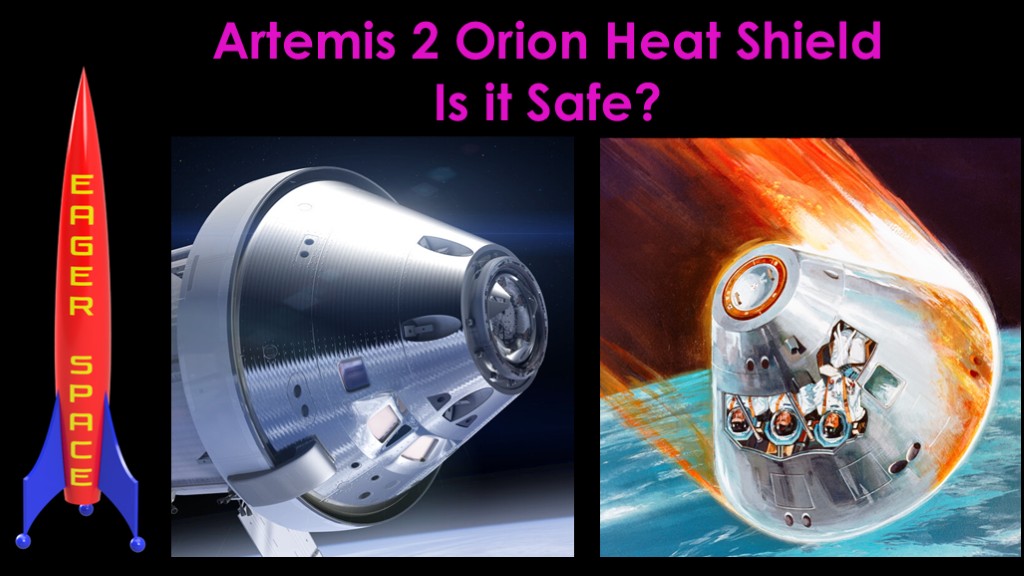
It's been a while since I talked about the Orion capsule heat shield issues, and with Artemis II in the wings, it seemed like a good time to revisit this topic.
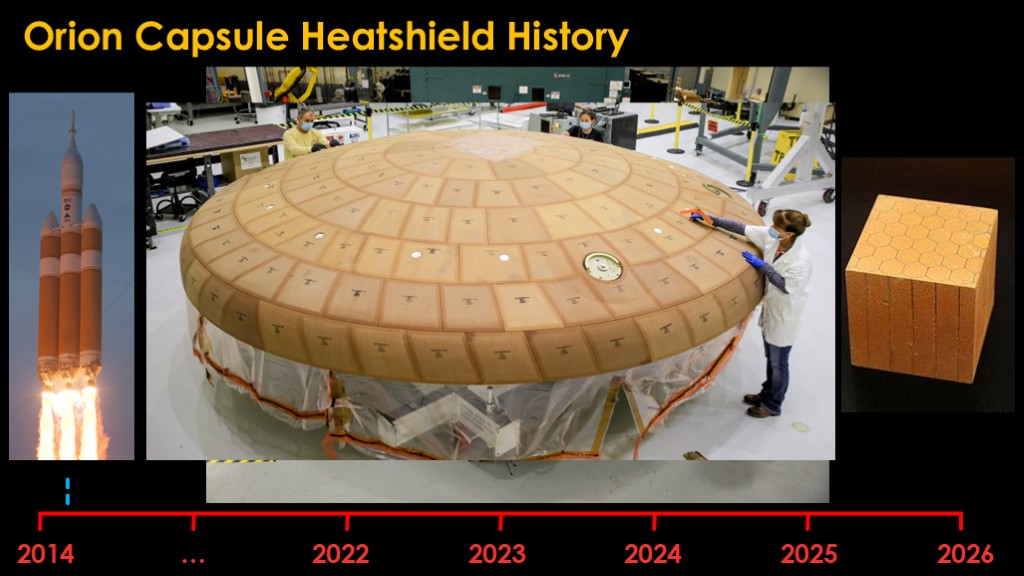
Way back in 2014, NASA flew an early version of Orion on top of a delta IV heavy rocket in a test known as ETF-1.
The heat shield for this flight was an Apollo-style honeycomb heat shield, with numerous hexagonal cells filled with an ablative material known as AVCOAT. Filling all those cells takes a long time.
NASA decided to change the heat shield to a block design to be stronger, cheaper, and quicker to fabricate. That was an aggressive move as they only had one test flight to validate their new design before astronauts were scheduled to fly on it.
8 years passed...
Finally, in November 2022, NASA launched artemis 1. It was largely billed as a very successful flight with only small issues, nothing that would significantly delay Artemis II, scheduled to launch roughly 1 year later. There was a mention of excess charring in the heat shield but it was "under analysis" and there was no information available.
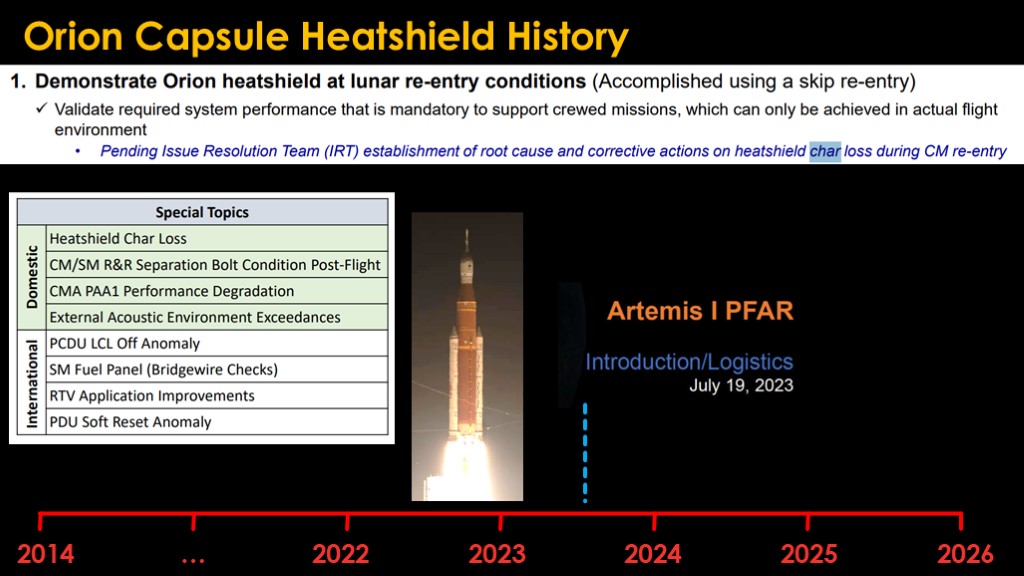
Approximately 8 months after the flight, in July of 2023, NASA held a post flight assessment review, or PFAR and I obtained the slides for it through a freedom of information act request. NASA has often published flight reviews in the past but chose not to do so, which is frankly disappointing and violates NASA's charter to share as much information as practicable.
In it there's a high level assessment that the heat shield char loss now has a team assigned to it. That little check mark means "Achieved, except where noted otherwise". It worked fine except that it didn't.
There is a specific section on Orion in the presentation which has this table, with "heatshield char loss" as the first special topic. Unfortunately, there are no detailed slides about Orion and I got no audio or video records from my FOIA request.
There was an issue with the heat shield but not much info available. It seemed NASA didn't want to talk about it.
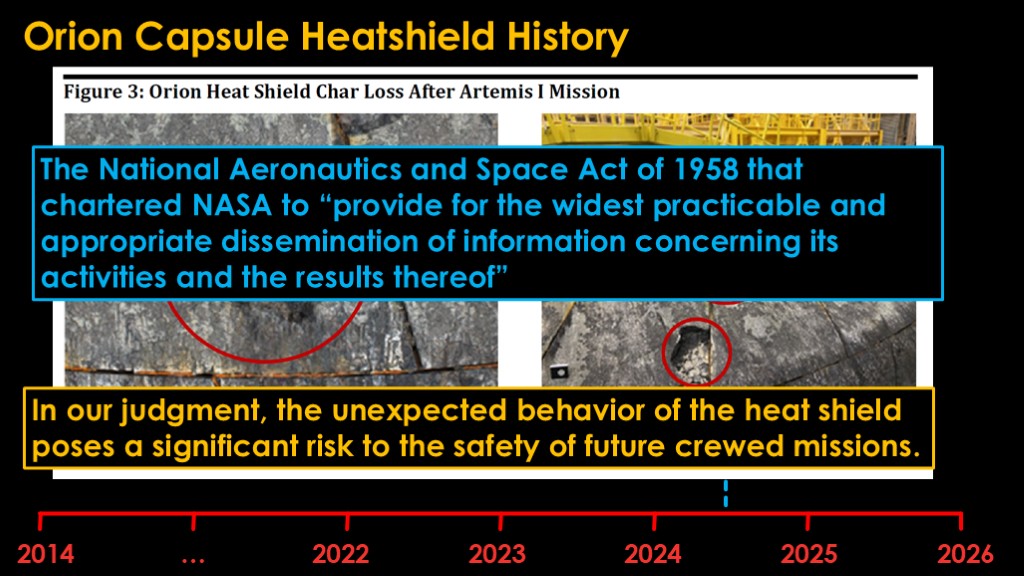
Another year passes, and in May of 2024, the NASA office of the Inspector General drops a bombshell.
It's not that there was unexpected charring of the heat shield, it was that parts of the heat shield came off in chunks. NASA had these pictures in early 2023 but had neglected to share them.
In their report, OIG wrote (read)
In an earlier video I called this a coverup, and I still think there's no other word for it. NASA tried to hide what was going on, and we only knew about it because of the Inspector General.
NASA's own guidelines say the following (read)

Either because they were unable to solve the problem or because of the OIG report, NASA assembled a tiger team of experts to work on the problem, most either current or past NASA employees.
NASA said they would have a final report by the end of the summer.
That fall I wondered where the report was, so I made another FOIA request.
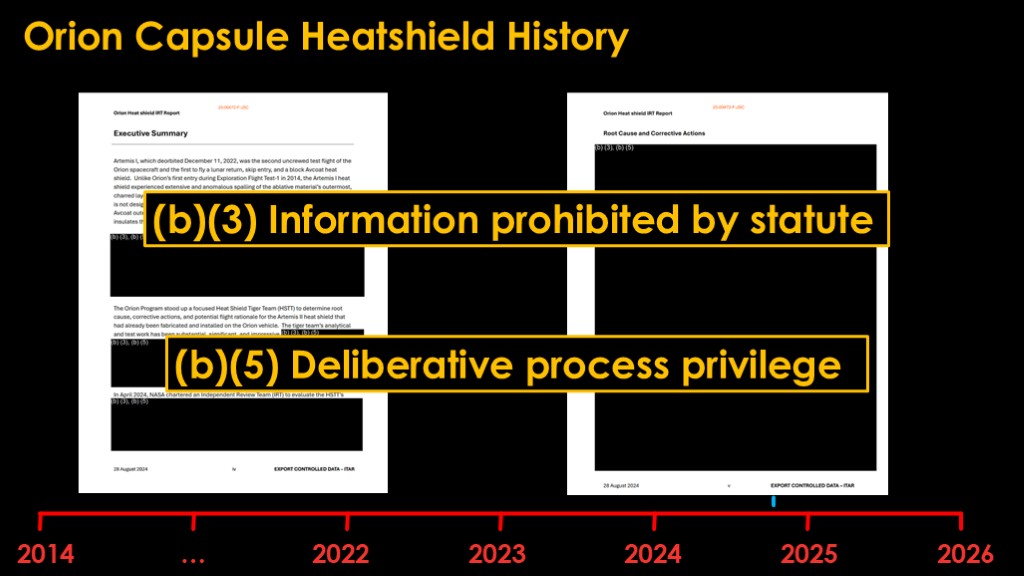
The report I got is dated August 2024. Here are the executive summary and root causes and corrective actions pages. It is very common to have sections of documents be redacted because of various reasons. Each of the black redacted blocks list the justifications for those redactions, using tags that refer to sections in the freedom of information act legislation.
(b)(3) is information prohibited by statute. In this case, it means ITAR, the international traffic in arms regulations. And that's obviously something NASA would need to care about here, since heat shields are used in missiles.
(b)(5) is deliberative process privilege. It's intended to protect documents that are both "predecisional" and "deliberative". This covers recommendations, draft documents, proposals, suggestions, and other subjective documents that reflect the personal opinions of the writer rather than the policy of the agency.
Are these reasonable redactions?
In many cases, I can't comment on the ITAR related ones because a) I can't see the information and b) I don't know what heat shield information is in the public domain and therefore excluded from redaction.
But I can make a guess on the deliberative process privilege ones.
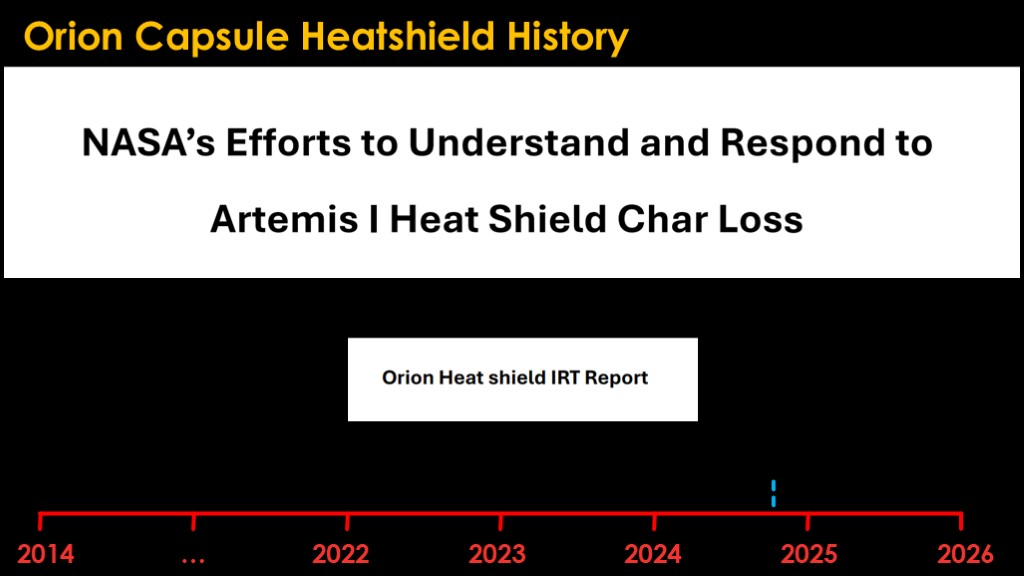
The title page on the document that I received was (read).
But the header at the top of every page after the title page says (read).
I believe NASA is playing games here. This is the final report of the independent review team, but NASA has retitled it to appear to be about how NASA is trying to solve the problem. I believe that is so they can use the second redaction exemption that I mentioned.
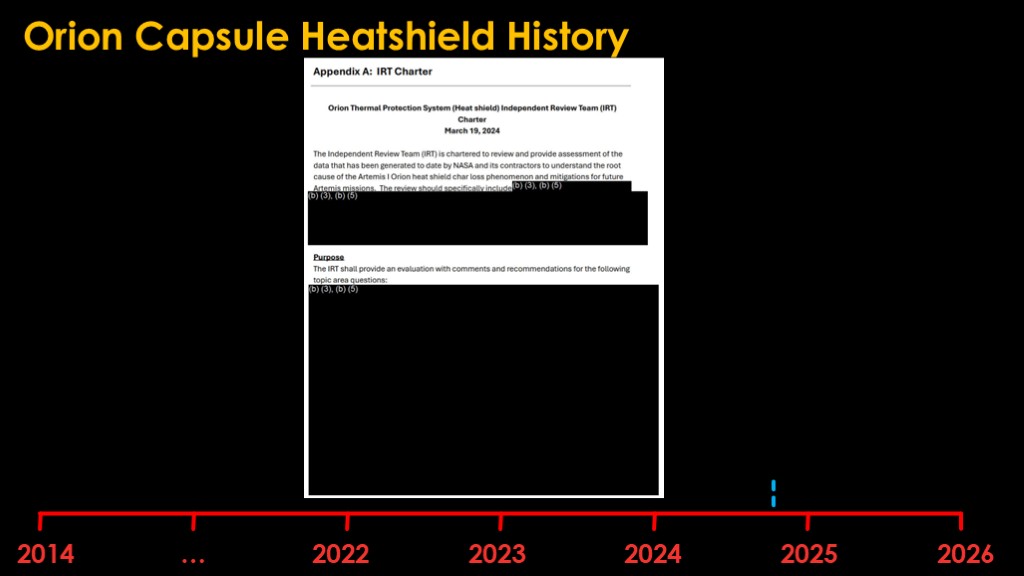
Near the end of the document is the charter for the review team.
The first section describes what the review should contain and the second section describes what topic area questions they should cover.
All these redactions reference both the ITAR and the deliberative process exemptions.
It is possible that some of the items that were redacted do meet the exemption requirements. It is very unlikely that the everything in both of these blocks meets the requirements.
I should have noticed these issues and filed an appeal of the redactions, but I was distracted with other topics and didn't bother.
Bad EagerSpace!
This is "business as usual" at NASA spaceflight - it's the same approach of hiding information on the Orion Heat shield that NASA has taken since Artemis 1 flew.
And in case you are wondering, the pages I showed are not exceptions. The document is 71 pages long and there is precisely zero technical information that is not redacted.
A more detailed answer finally came in December of 2024, when NASA put out a press release.
Here's their explanation...
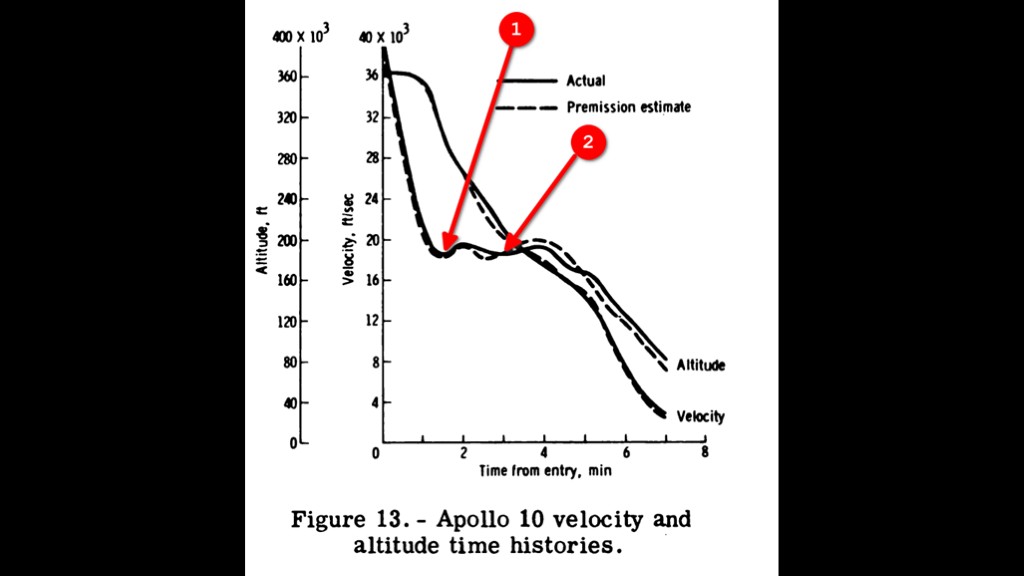
Artemis 1 not only used a new heat shield design, it used a new reentry trajectory
In Apollo, the capsule starts reentry and then stays at about 200,000 feet (60 kilometers) for about 4 minutes. That bleeds off most of the energy.
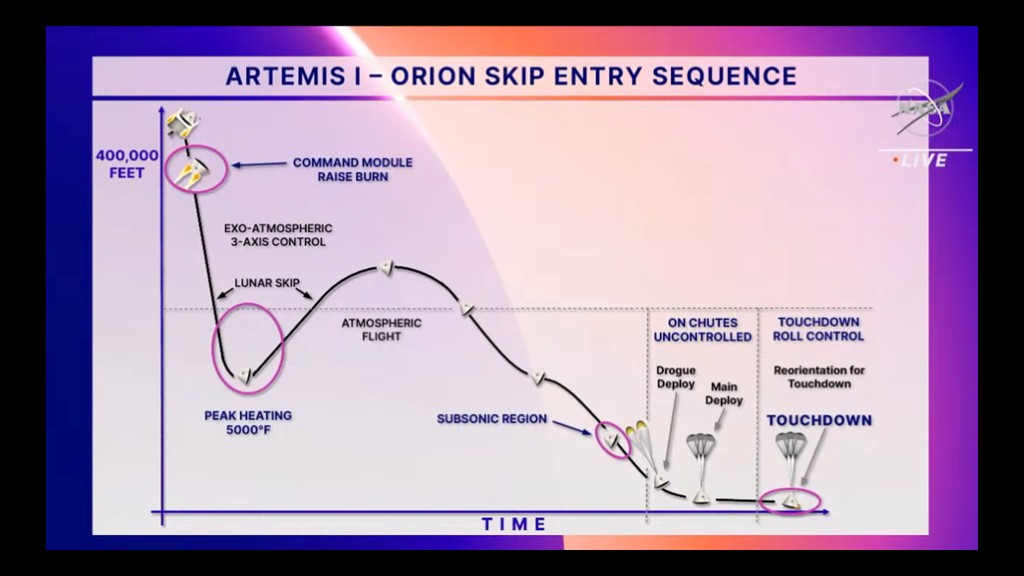
Artemis 1 used a two stage, or skip reentry, with a goal of better predictability of their landing site.
It reentered fairly steeply to lose a lot of energy, and then it skipped back out off the atmosphere, cooled down, and then reentered a second time.
Was this skip entry the cause of the heat shield issues?
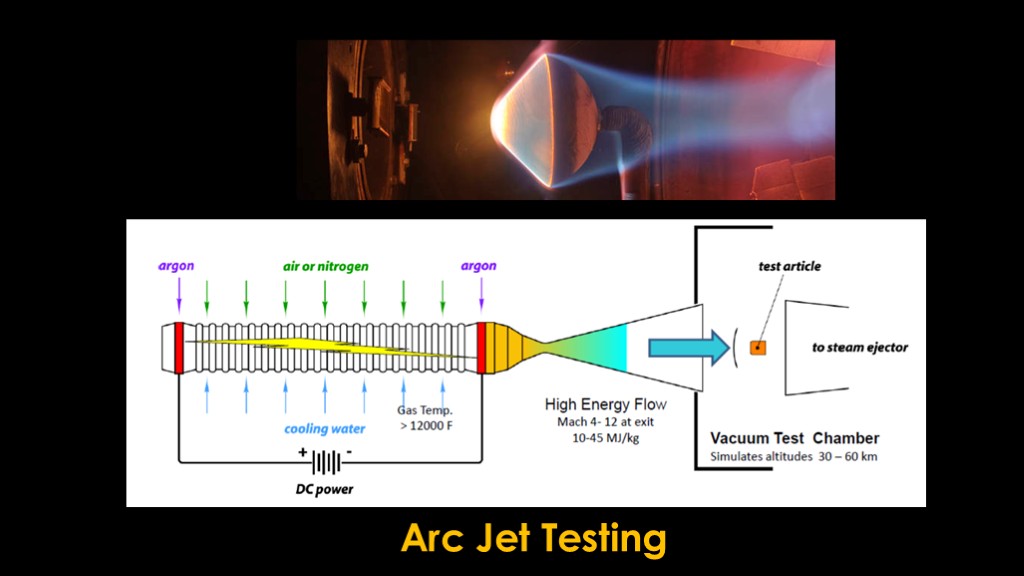
NASA tests heat shield materials in their Arc Jet testing facility at NASA's Ames Research Center in Mountain View California.
The arc jet is unique in that it can produce both very high energy levels and very high flow rates to simulate the conditions experienced during reentry.
Both the old and new Orion heat shield designs were tested using that facility.
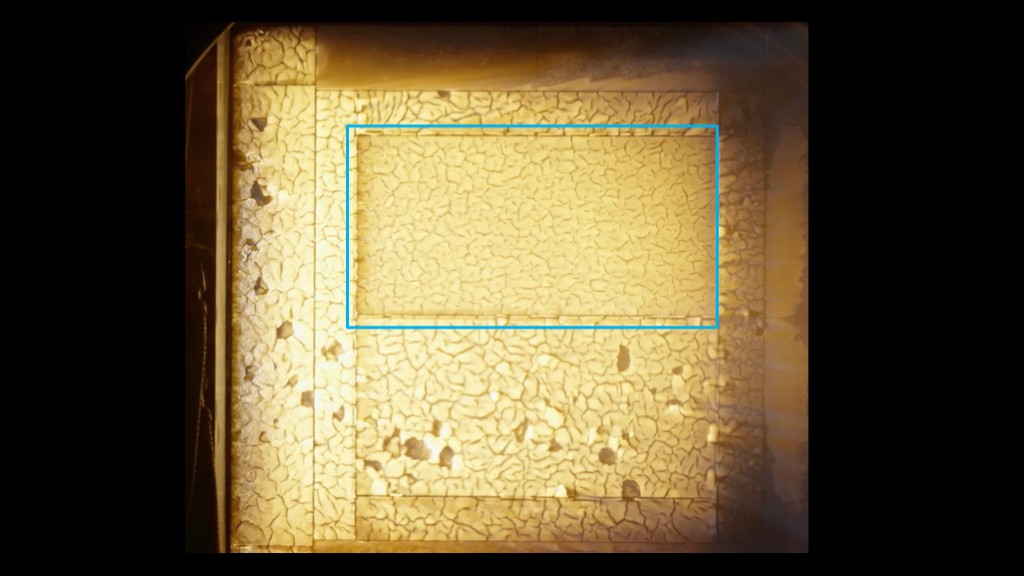
When an ablative heat shield gets hot, the surface of the material ablates - it's slowly burned and turns to gas. Most of the gas escapes but some of it seeps back into the AVCOAT material.
Either during the post-skip cooling phase of reentry or during the second heating phase, that gas blew chunks out of the heat shield.
This is a test sample of AVCOAT after testing in the arc jet lab using the artemis 1 reentry profile. When you read that NASA has reproduced the heat shield phenomena, they are referring to tests like this.
You can see all the missing chunks.
The upper section is a different formulation of avcoat - one that is more permeable. It allows gas to travel through the material and does not show the same issues in this test.
NASA's theory is that the combination of the skip reentry and the less-permeable AVCOAT is what is causing problems.
Now that NASA understood the problem, they needed to figure out what to do about it.
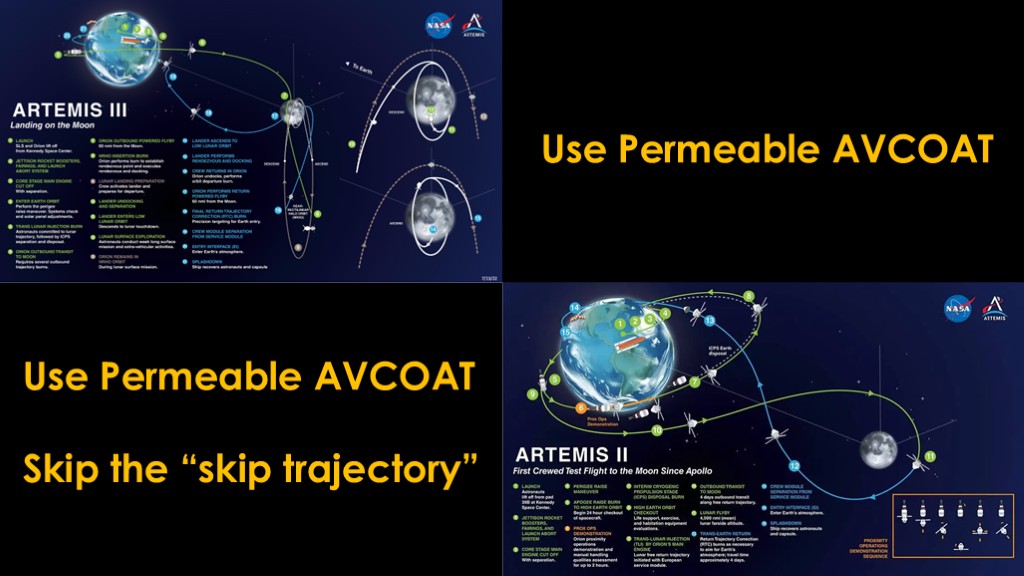
For Artemis 3, the solution was simple. Use the permeable AVCOAT, and maybe fly a different trajectory.
For Artemis 2, NASA considered two options.
They could replace the Artemis 2 Orion capsule with the one for Artemis 3 that uses permeable avcoat. That would involve a significant delay and expense.
Or they could skip the skip trajectory reentry and fly the sort of trajectory that Apollo flew. Based on what they knew, the AVCOAT on the Artemis 2 Orion would be fine.
They chose the second option - fly Artemis 2 on a different trajectory.
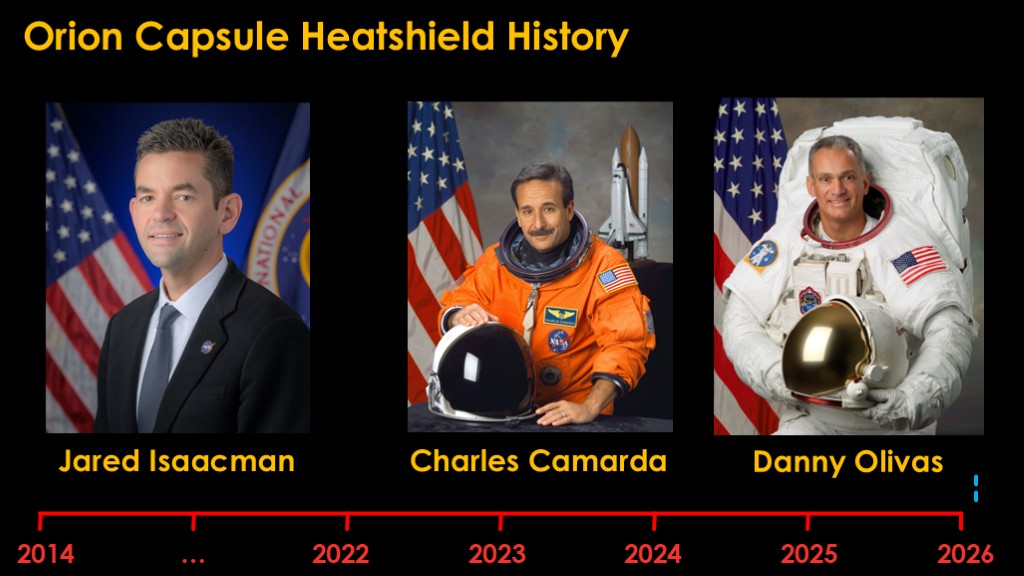
Another year goes by, bringing us to 2026.
Early in 2026, something surprising happened...
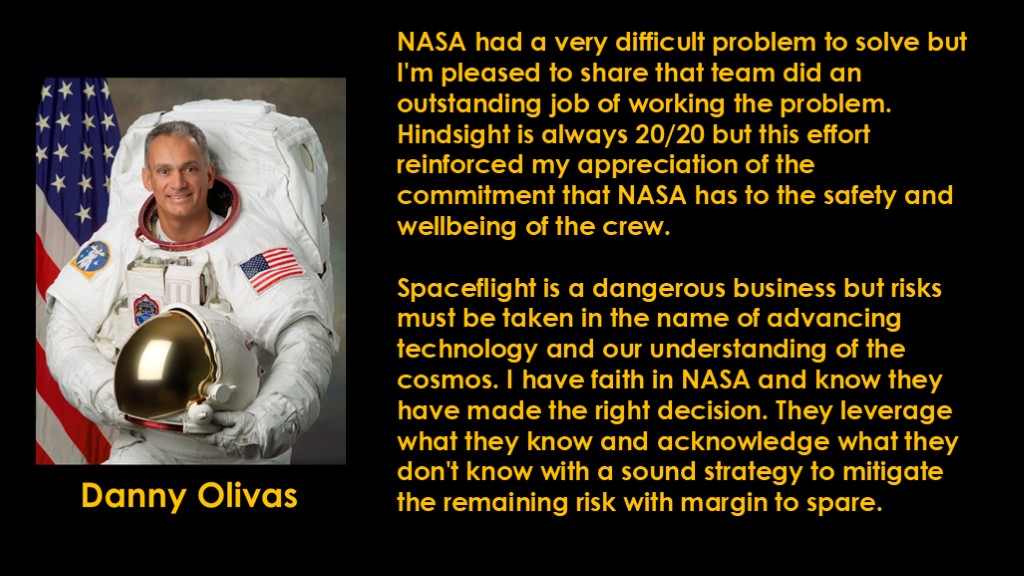
Newly appointed NASA administrator Jared Isaacman decided to have the heat shield team present their findings to outside experts. Included were astronauts Charles Camarda and Danny Olivas.
Isaacman also included two reporters - Eric Berger from Ars Technica and Micah Maidenberg from the Wall Street Journal.
The fact that Isaacman set this up is very important. I was asked last spring what one thing I would ask Isaacman to do at NASA, and my answer was to restore transparency to the agency. This was an important example of what I would like to see, but I will note that NASA did not make the review materials publicly available. A step forward, but more steps are still needed.
Were these experts convinced that it was safe to fly astronauts on the Artemis 2 capsule after they attended the presentation.
Olivas had reportedly said that he would not fly on Orion in the weeks before the meeting and then wrote this afterwards.
(read)
He had changed his mind.
But Olivas has been a member of the NASA Advisory Council for 4 years, and had been working with the Orion heat shield team since late 2023 and sat in on the review team's meetings through 2024. That means he's not an independent expert, he's an outside expert that NASA has been paying.
But what I noted the most is the tone and content of what he wrote.
They leverage what they know and acknowledge what they don't know with a sound strategy to mitigate the remaining risk with margin to spare.
That is not an engineering perspective, that's a public relations perspective.
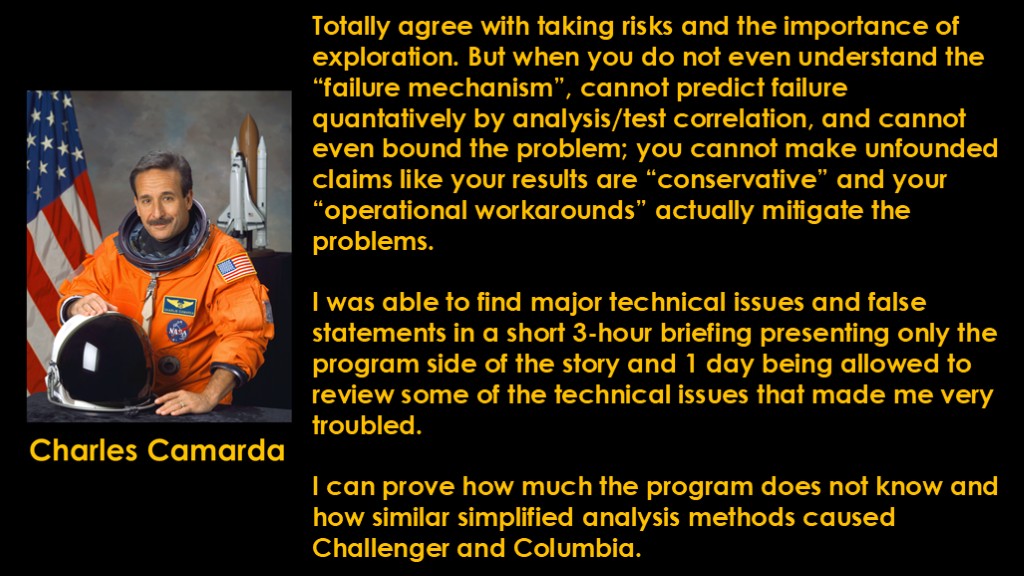
We can contrast what Olivas wrote with what Camarda wrote, which I have excerpted from his post on LinkedIn.
(read)
https://www.linkedin.com/posts/charlescamarda_is-orions-heat-shield-really-safe-new-nasa-activity-7416774918908026880-BrN-/
That is an engineering opinion. Carmarda might be wrong, but he is writing about the technical side.

So what should we conclude?
Is the orion heat shield on Artemis II Safe?
I really hate the word "safe" in terms of spaceflight because nothing in life is truly safe.
This the wrong question to ask.
What we should ask is whether the risk of flying astronauts is justified. Are the benefits that we are looking to achieve worth the risk to the astronauts?
For more on this perspective, read Rand Simberg's excellent book "Safe is not an option". The ebook version is only $5.
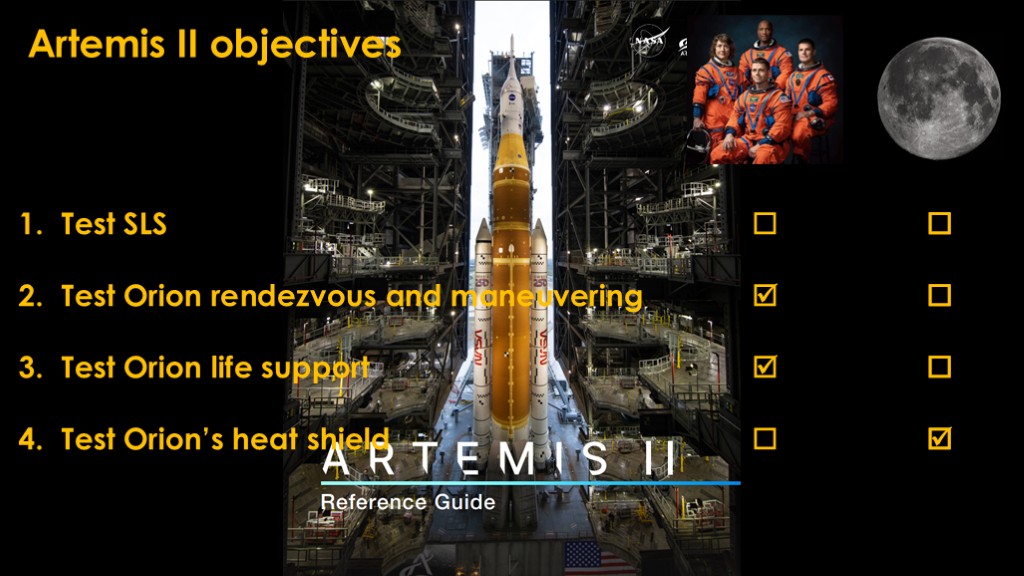
To do a risk benefit analysis, we need to understand what the objectives of Artemis II are.
This information was surprisingly hard to find. NASA's 138 page Artemis II reference guide says that each flight fulfills a methodical list of test objectives but doesn't provide an overview of what those objectives are, so you need to dig deeper to come up with your own list. These are the main ones I came up with.
The first one is to test SLS. It worked well on Artemis 1 but more data is very welcome.
The second is to test orion rendezvous and maneuvering. It will do this using the second stage as a target. There's no "and docking" part of this because neither the ICPS second stage nor the Artemis II Orion capsule have docking adapters.
The third is to test the orion life support system. That includes both the systems in Orion and the Crew survival system, the spacesuit developed from the space shuttle suit.
And the fourth is to test Orion's heat shield.
Is it worth it to risk astronauts on a lunar mission for these objectives?
SLS can obviously fly without astronauts, and it doesn't care whether it goes to the moon or not.
Orion could do rendezvous and maneuvering tests without crew , but the manual systems need astronauts for a full test. These tests do not require a mission to the moon, and in fact are planned for earth orbit before heading to the moon.
A full test of life support does require humans. It does not require a lunar mission.
Testing the heat shield on a second lunar mission would be a great way to gather more information before Artemis 3, but this doesn't require humans. We also know that Artemis III will be using a different heat shield material - the permeable avcoat - and it may fly a different trajectory, so the Artemis II data won't be a good validation for the new heat shield.
There is some value of a lunar mission, but it's not significant.
What does this mean? It means that flying a lunar mission with Artemis II doesn't really help accomplish the technical goals of the project, and that means you aren't getting any real benefit from the additional risk that the lunar mission adds. You don't have subject the heat shield to a lunar mission return, you can just fly an orbital mission and do a slower and safer reentry.
Why doesn't NASA just do that?
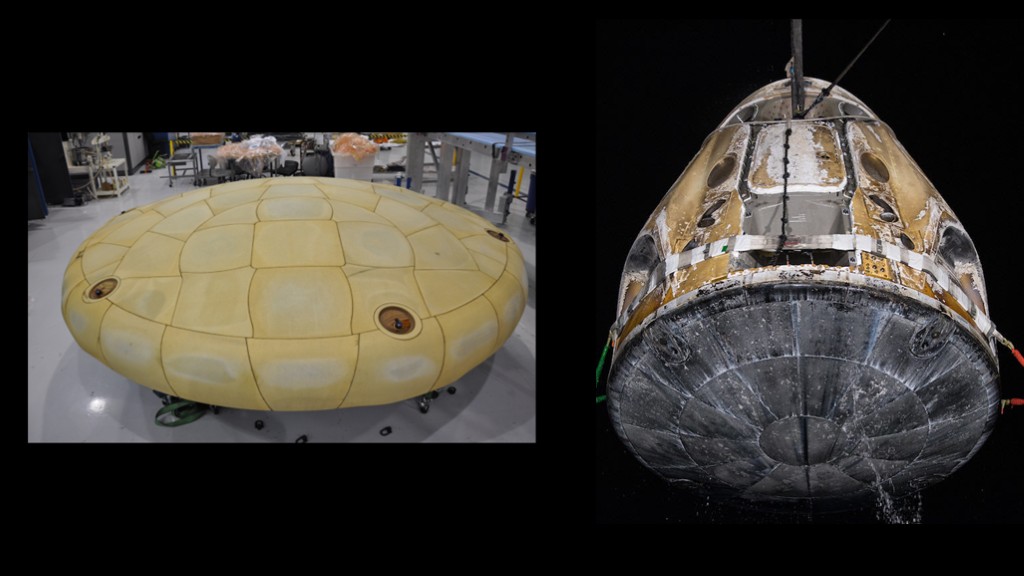
Let's say that a similar issue cropped up with the crew dragon or starliner heat shields. If the issue was understood and there was a new version available, would NASA spend any time trying to figure out whether the existing versions could fly?
The answer is pretty clearly "no". You would toss out all the old ones and just fly the new ones. It might cost you a few months but it's an easy decision to make.
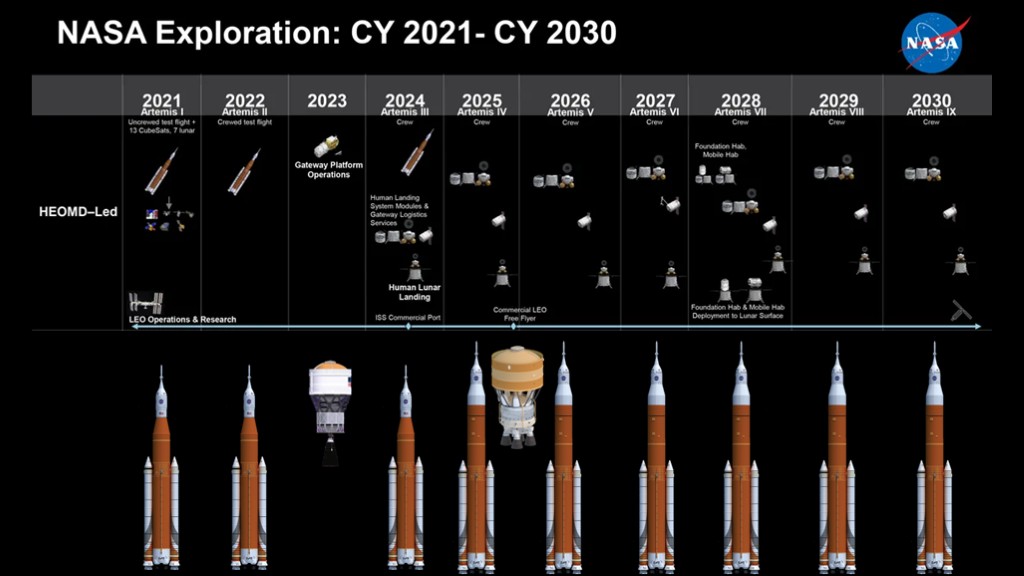
The real driver behind NASA's choices is complicated.
This is the NASA exploration plan from early 2020. They would fly Artemis 1 in 2021, Artemis 2 in 2022, and Artemis 3 on a lunar landing mission in 2024. All of these would use the block 1 version of SLS, which uses the ICPS upper stage, a lightly modified Delta IV upper stage. It is comically small for SLS, but it was the stage that NASA could buy.
Then the block 1b version of SLS would show up for Artemis IV, and it would fly every year from 2024 to 2030. It uses the new exploration upper stage which will greatly expand the SLS payload and allow it to carry gateway modules to lunar orbit.
That was the plan, but it has basically fallen apart.
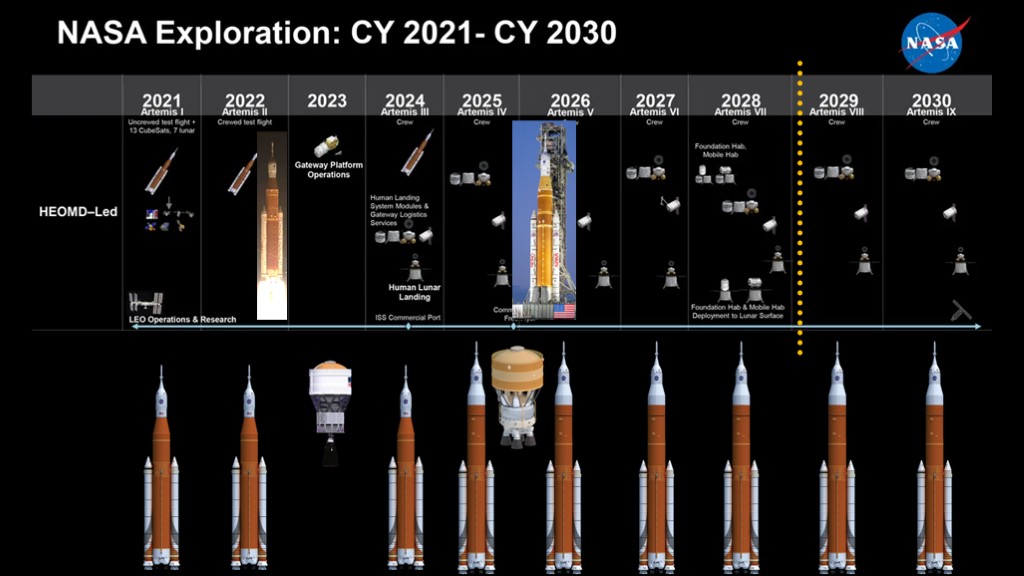
Artemis 1 flew in late 2022, and NASA is currently working on launching Artemis 2 in the spring of 2026.
NASA recently pushed out Artemis III to early 2028. It is slated to use their last block 1 SLS and there are no more ICPS upper stages available for future flights.
Under the original plan, they should have block 1b rockets waiting in the wings, but the exploration upper stage continues to slip. The most recent estimate I could find was that it will be ready in April of 2027, but that estimate is 30 months old and it is likely that it will be further delayed. The SLS core stage for Artemis IV is also estimated to be done sometime in 2027. That puts the first block 1b flying in 2028 at the earliest and the chances of that seem to be low.
NASA has a directive from the administration to fly before early 2029. They simply *do not* have the hardware to put an extra Artemis 2.5 mission in the middle - it's highly unlikely block 1b will be ready in time given what we know right now.
It's not that NASA has "go fever". They are just trying to meet a specific deadline and they don't have the hardware to do anything different.
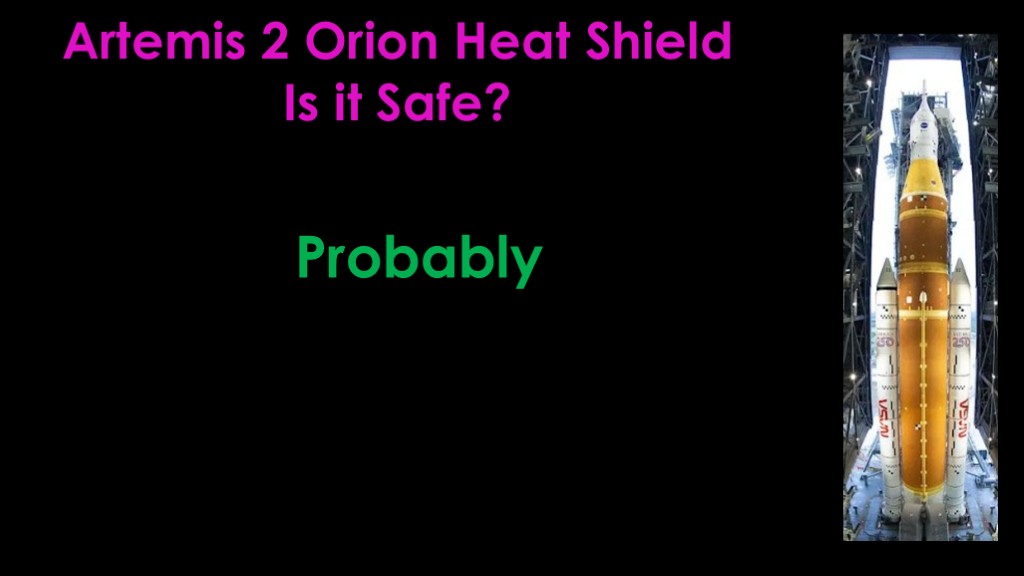
Is the artemis 2 orion heat shield safe?
They are flying days away from home and their safe return depends on a heat shield with known issues the we hope are well understood.
I expect that they will probably be fine.
But "we think it's going to be fine" isn't a great way to run a human spaceflight program.
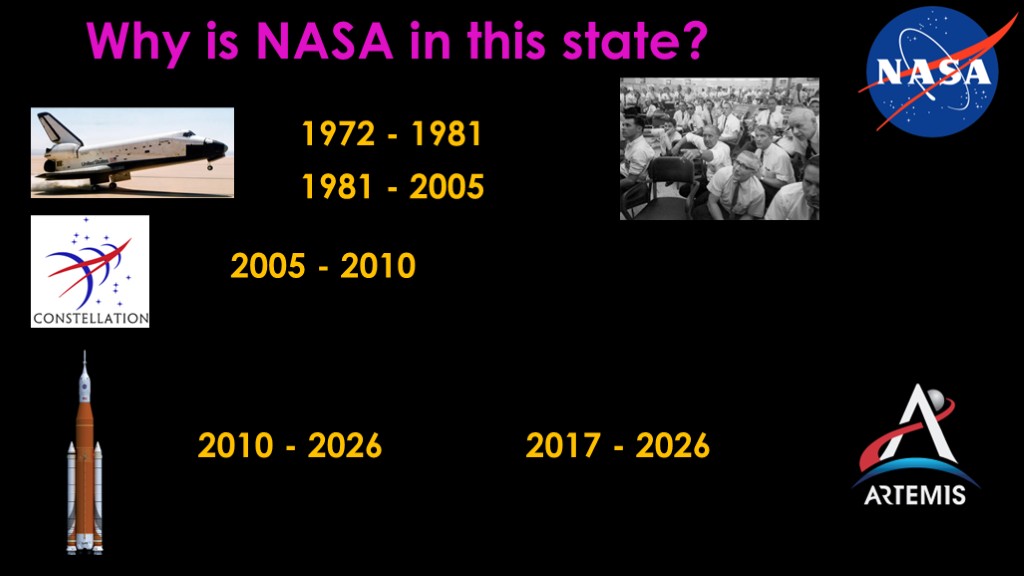
Why is NASA in this state?
There are two big factors.
NASA developed the whole shuttle system in about 9 years, from 1972 to 1981. They relied heavily on the engineers that had worked through Apollo to do this work.
Then all the human spaceflight part of NASA did was fly it for 24 years. They got good at the operations part of spaceflight, but the engineers who were skilled in the development side retired or left to take on new challenges.
In 2005, NASA got a mandate to go back to the moon, and that led to the constellation program. It lasted 5 years without producing any real flight hardware.
Then in 2010, Congress told NASA to build SLS, and in 2017, it was assigned the mission of going to the moon.
16 years of development using many existing shuttle parts and only now coming up on the second flight.
NASA isn't running an efficient program. There are very talented people in NASA, but the bureaucracy that grew up during shuttle simply is not up to the task.
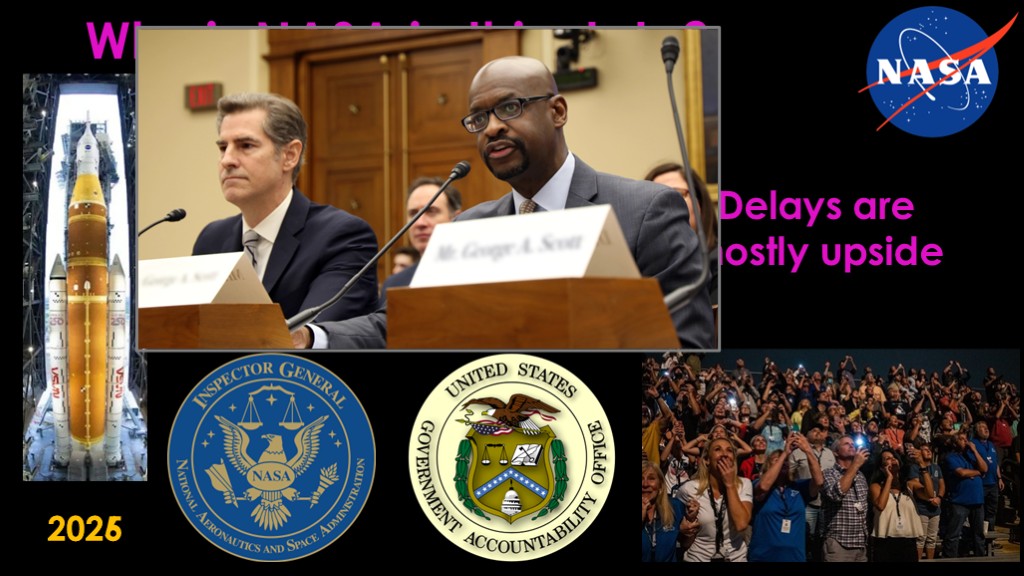
But there's a bigger issue, a structural one that I can best illustrate with an example.
Let's say there's a NASA rocket launch that was targeted for 2025 and it ends up being delayed a whole year to the same time in 2026.
This sort of thing is common on the commercial side, and big delays are problematic. They can - and do - kill companies.
How does the NASA world react to a one year delay?
NASA workers are disappointed but most of them will have a job doing the same thing they were doing. Not a big effect for most, though some might be laid off.
NASA managers get another year of free experience and a nice government job. The scary part for NASA management is when they actually fly - they have lots of experience not flying and that is a comfortable state to be in.
The contractors working on the rocket are in a similar state. Longer contracts often mean more money, and not flying has much less risk than flying.
Congress is also happy - the money keeps flowing into the NASA centers and contractors in their states, and some of that money makes it back into their reelection campaigns.
This means that delays are mostly upside for the people involved in the program. That is the direction that the incentives push them, and that's a major factor why programs like Artemis are the way they are.
There are groups that have incentives the opposite way. The NASA office of the inspector general regularly publishes reports that are critical of NASA programs, as does the government accountability office. Congress holds hearings where they are "gravely concerned" about the state of NASA programs, and then it's back to business as usual.
And there's a third group. Spaceflight fans like you and me would *love* to see more efficient programs that are flying all the time. Unfortunately, our opinion doesn't matter.
And that's the end of the video. Artemis II astronauts will probably be okay, and we can expect the Artemis program to keep spending over $4 billion a year and having more delays.

Today's song is Runaround by Van Halen
https://www.youtube.com/watch?v=oy_4No7h2Vg